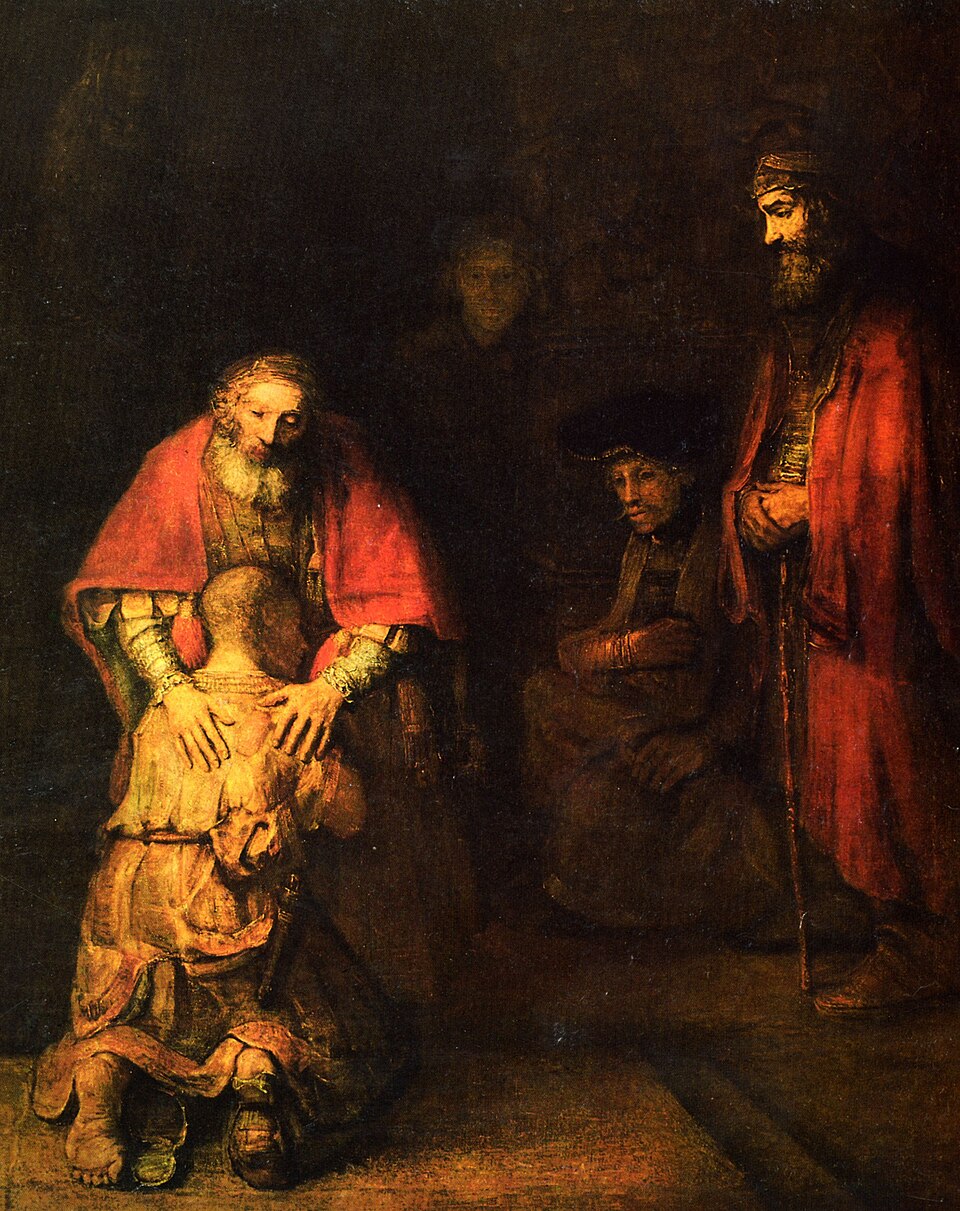
Rembrandt grew up in a religiously divided home — a Catholic mother, a Reformed-church father — and as an adult joined no church himself. Yet roughly a third of his life's work depicts biblical scenes, and he painted himself into many of them. One scholar described the Bible as, for him, "a kind of diary, an account of moments in his own life." Held at the State Hermitage Museum, St. Petersburg.Rembrandt creció en un hogar religiosamente dividido — una madre católica, un padre de la iglesia reformada — y de adulto no se unió a ninguna iglesia. Sin embargo, aproximadamente un tercio de la obra de su vida representa escenas bíblicas, y se pintó a sí mismo en muchas de ellas. Un académico describió la Biblia, para él, como "una especie de diario, un relato de momentos de su propia vida". Conservada en el Museo Estatal del Hermitage, San Petersburgo.
Source: Fuente: Wikipedia — Rembrandt
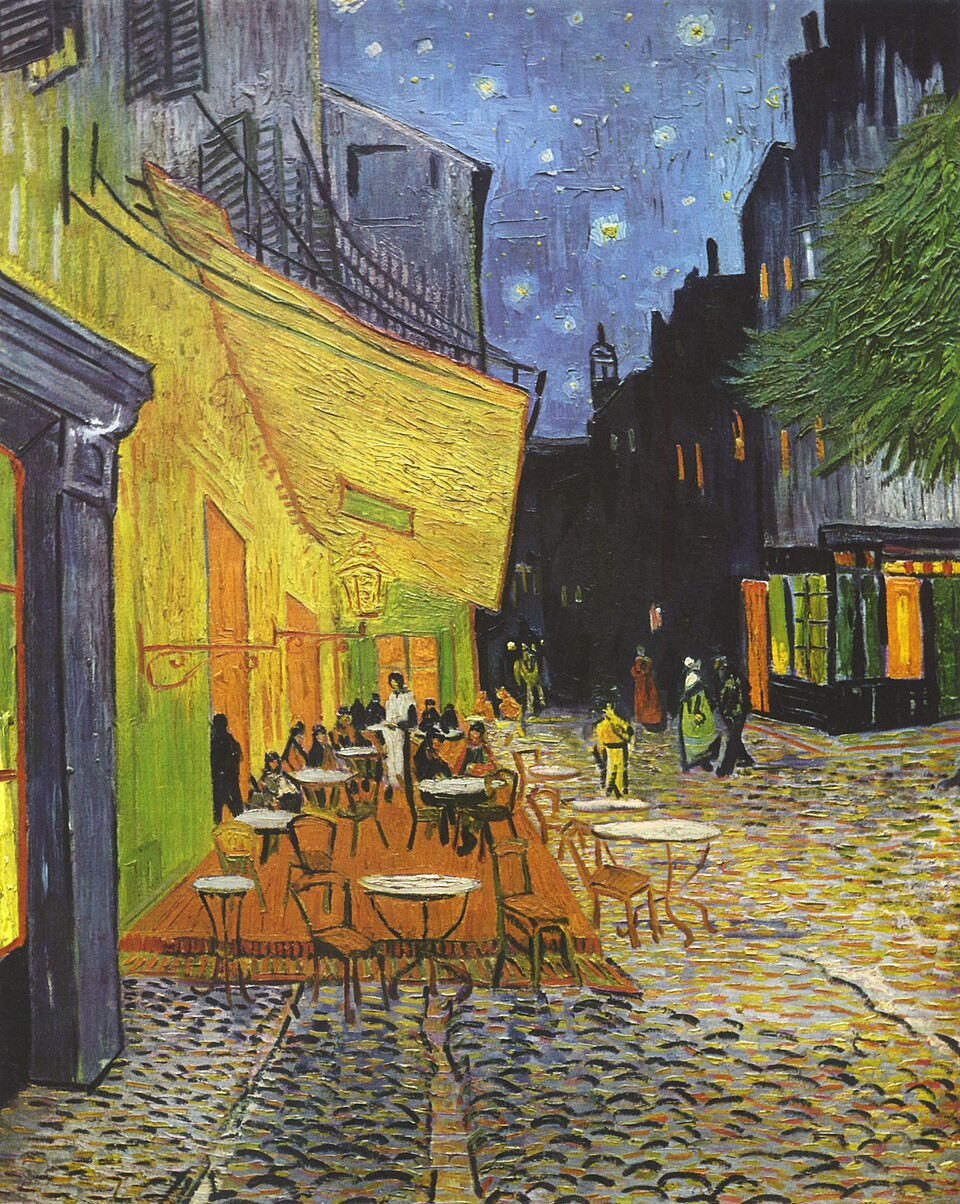
Van Gogh was a pastor's son who tried to follow his father into ministry — he failed the theology entrance exam, then failed a missionary course, then worked as a lay preacher among Belgian coal miners, living in their poverty alongside them. Church authorities dismissed him for "undermining the dignity of the priesthood." Afterward he broke with the church outright, refusing to attend services, and turned to painting — later writing to his brother that nature and human life had come to stand in for "something up there," something he could feel but not name. Held at the Kröller-Müller Museum, Otterlo, Netherlands.Van Gogh era hijo de un pastor y trató de seguir a su padre en el ministerio — reprobó el examen de ingreso a teología, luego reprobó un curso misionero, y después trabajó como predicador laico entre los mineros de carbón belgas, viviendo su pobreza junto a ellos. Las autoridades eclesiásticas lo destituyeron por "socavar la dignidad del sacerdocio". Después rompió por completo con la iglesia, se negó a asistir a los servicios, y se volcó a la pintura — más tarde le escribió a su hermano que la naturaleza y la vida humana habían llegado a representar "algo allá arriba", algo que podía sentir pero no nombrar. Conservada en el Museo Kröller-Müller, Otterlo, Países Bajos.
Source: Fuente: Wikipedia — Vincent van Gogh
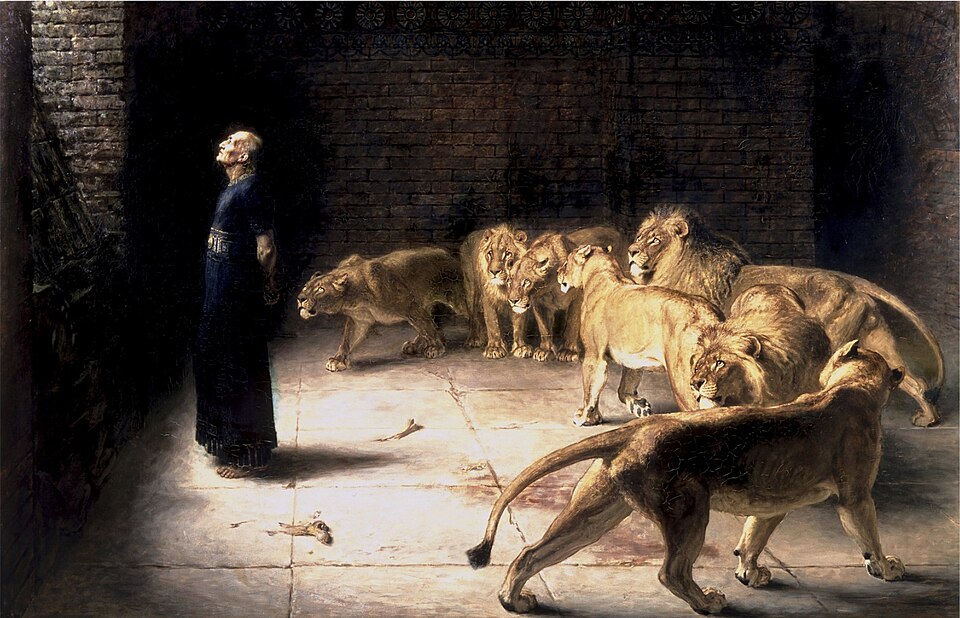
Rivière descended from Huguenots — French Protestants who fled religious persecution generations earlier — but no detailed record of his own personal faith or spiritual struggle survives in available biographical sources. What is documented is that he returned repeatedly to Scripture for subject matter, with this painting among his best-known religious works. Held at the Manchester Art Gallery.Rivière descendía de hugonotes — protestantes franceses que huyeron de la persecución religiosa generaciones atrás — pero no se conserva ningún registro detallado de su fe personal o de luchas espirituales en las fuentes biográficas disponibles. Lo que sí está documentado es que recurrió repetidamente a las Escrituras como fuente de temas, siendo esta pintura una de sus obras religiosas más conocidas. Conservada en la Galería de Arte de Manchester.
Source: Fuente: Wikipedia — Briton Rivière
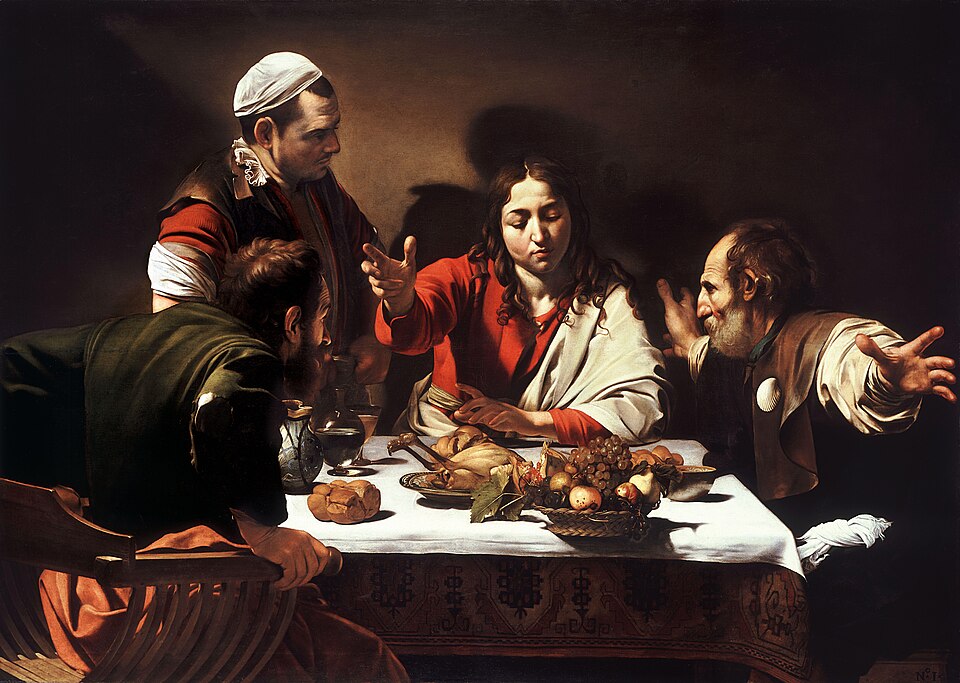
Caravaggio's life was violent and chaotic — repeated brawls, weapons charges, and in 1606 a killing that forced him to flee Rome for the rest of his life. Yet historians note his religious practice was conventional: he confessed, took Communion at Easter, and joined Eucharistic devotions, and the Brotherhood of the Little Oratory shaped his theological outlook. More than fifty of his roughly seventy known paintings depict saints or biblical scenes, many for churches and cardinals during the Catholic Counter-Reformation — a stark contradiction historians still debate, between a turbulent life and a body of work of "remarkable spirituality." Held at the National Gallery, London.La vida de Caravaggio fue violenta y caótica — riñas repetidas, acusaciones por armas, y en 1606 un homicidio que lo obligó a huir de Roma por el resto de su vida. Sin embargo, los historiadores señalan que su práctica religiosa era convencional: se confesaba, comulgaba en Pascua y participaba en devociones eucarísticas, y la Cofradía del Pequeño Oratorio moldeó su visión teológica. Más de cincuenta de sus aproximadamente setenta pinturas conocidas representan santos o escenas bíblicas, muchas encargadas por iglesias y cardenales durante la Contrarreforma católica — una contradicción marcada que los historiadores aún debaten, entre una vida turbulenta y una obra de "espiritualidad notable". Conservada en la National Gallery, Londres.
Source: Fuente: Wikipedia — Caravaggio
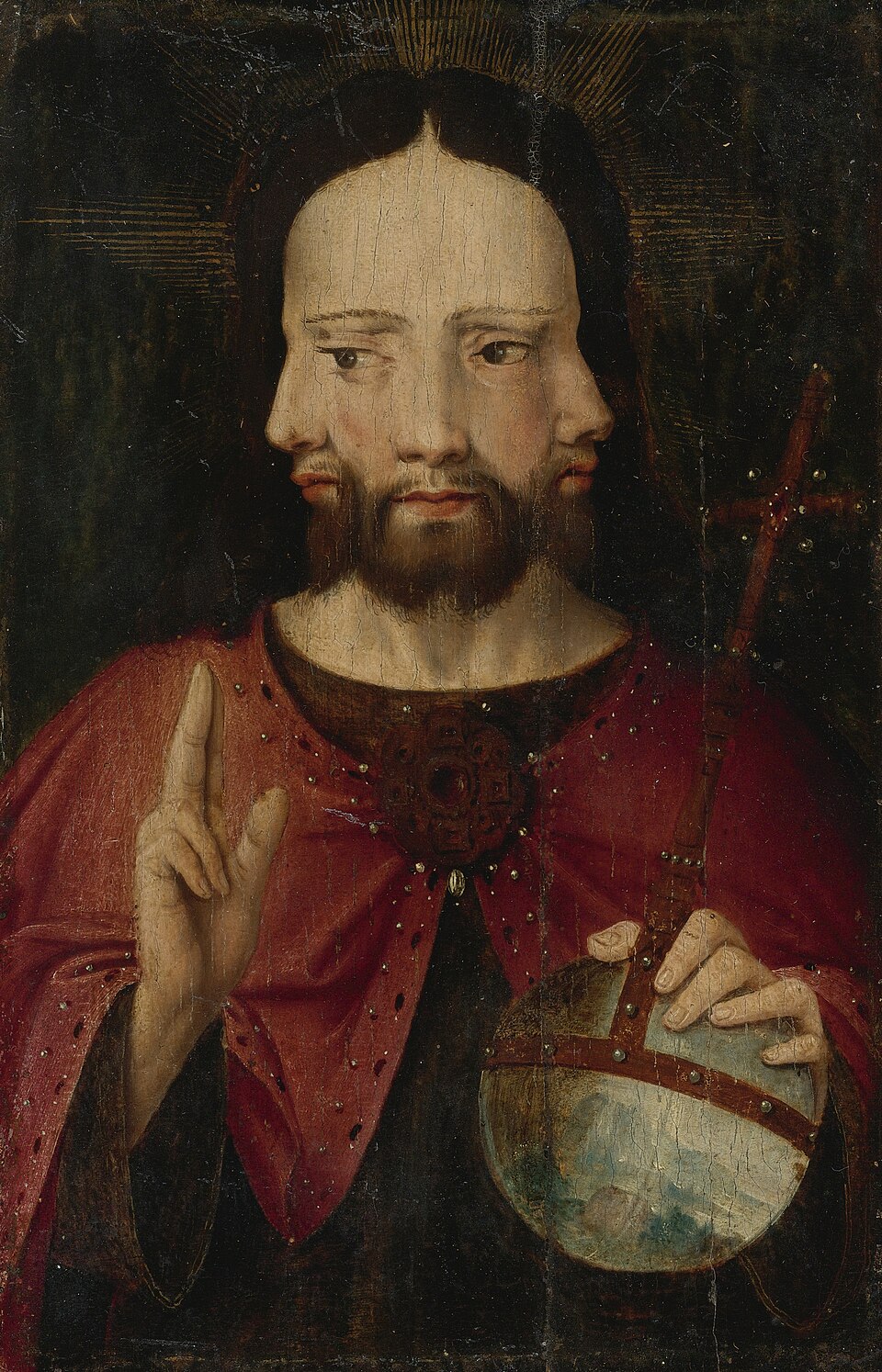
The artist's identity is lost, but the painting itself is a record of a faith struggle — not the painter's, but the Church's own wrestling with how far devotion can stretch a doctrine before it breaks it. Whoever made this believed sincerely enough in the Trinity to try giving it a face; the Church's later judgment was not that the attempt was faithless, but that no single image can hold three persons without distorting what "three persons, one God" actually means. No record survives of this artist finding personal resolution or controversy in their own lifetime — the condemnation came generations after such works were painted.Se ha perdido la identidad del artista, pero la pintura misma es un testimonio de una lucha de fe — no la del pintor, sino la de la propia Iglesia debatiéndose sobre hasta dónde la devoción puede estirar una doctrina antes de quebrarla. Quienquiera que hiciera esta obra creía lo bastante sinceramente en la Trinidad como para intentar darle un rostro; el juicio posterior de la Iglesia no fue que el intento careciera de fe, sino que ninguna imagen única puede contener tres personas sin distorsionar lo que en verdad significa "tres personas, un solo Dios". No sobrevive ningún registro de que este artista enfrentara resolución personal o controversia en vida — la condena llegó generaciones después de que tales obras fueran pintadas.
Source: Fuente: Wikipedia — The Trinity in Art